
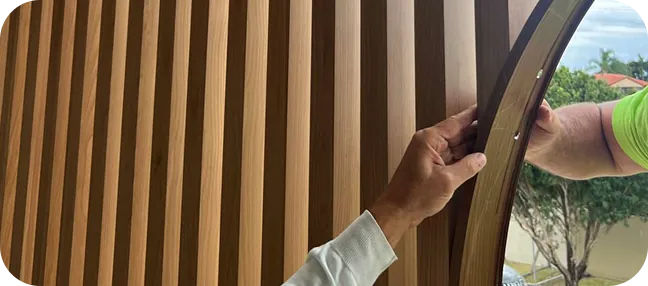
A high-level look at how woodgrain aluminium cladding goes up, and why it is faster on site than many traditional systems.
Battens and setout
Cladding is typically fixed to a battened or framed substrate that provides a drainage and ventilation cavity behind the boards. Getting the setout and the first line right is the key to straight, even coverage.
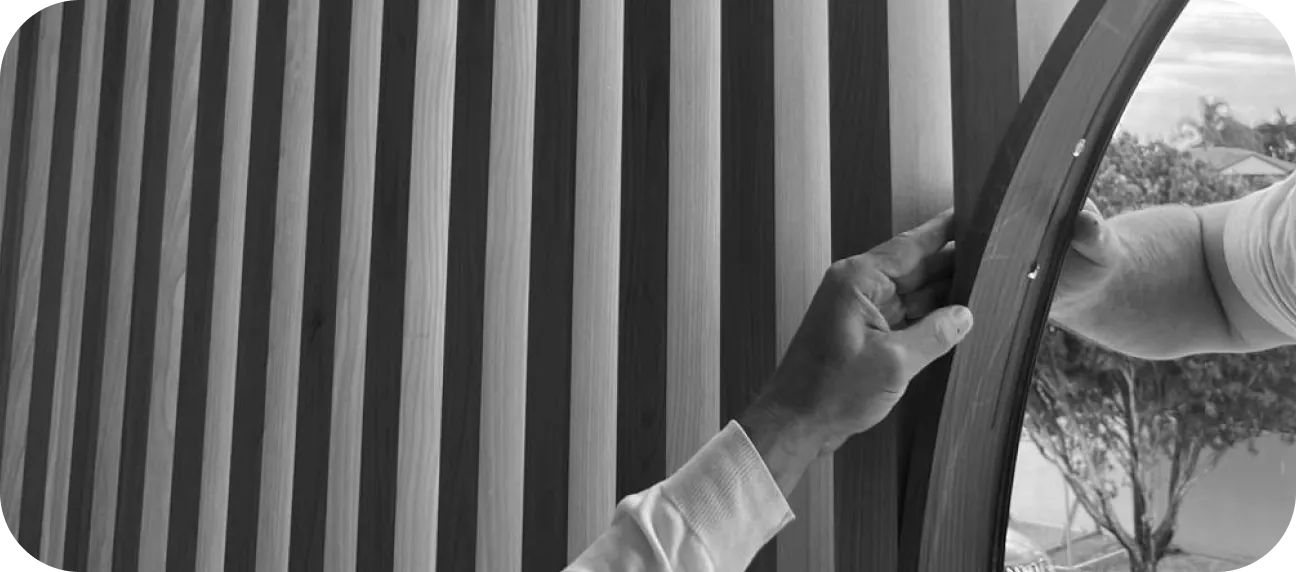
Concealed-fix profiles
Interlocking concealed-fix boards clip together so fixings are hidden, giving a clean face with no visible screws. This also speeds installation, since boards locate positively into one another.
Cutting and handling
Aluminium cuts cleanly with the right blade and is light to handle, which reduces fatigue and lifts on site compared with heavy hardwood or masonry. Edges and cut ends should be detailed neatly at junctions and trims.
Trims and junctions
Matching trims finish corners, windows, tops and bases. Planning these junctions early keeps the facade looking resolved and manages water at penetrations.
Why builders like it
Lightweight boards, concealed fixings and a finish that needs no painting on site mean fewer trades, faster cladding and no call-backs for re-oiling. Talk to us about profiles and detailing for your build.