
Our honest verdict
Fibre cement wins on upfront cost for painted or rendered looks. For a believable timber appearance with low weight and no repainting, woodgrain aluminium is the stronger pick.
Fibre cement's strengths
Fibre cement sheet and weatherboard is non-combustible, widely available and competitively priced, which makes it the default for many volume builds. Timber-look fibre cement boards exist, though the grain is usually a moulded texture rather than a photographic woodgrain.
Where aluminium differs
The timber look on woodgrain aluminium is sublimated - a high-resolution grain fused into the coating - so it reads as real timber more convincingly than a moulded fibre-cement profile. Aluminium is also far lighter, which eases handling, spans and structural load.
Fibre cement that is painted will eventually need repainting; the baked sublimated finish on aluminium does not. Fibre cement can also chip and absorb moisture at cut edges if not sealed, where aluminium does not.
Honest trade-off
On a straight material price, fibre cement is usually cheaper to buy. The aluminium case is built on the finish quality, weight, and the absence of a future repaint cycle - a value-over-time argument rather than a cheapest-today one.
The two contenders
Woodgrain aluminium
Solid marine-grade aluminium with a sublimated woodgrain coat. Non-combustible substrate, holds its day-one colour, and needs only an occasional wash - no oiling, no recoating.
Fibre cement
Fibre cement is the value workhorse; aluminium is lighter and carries a more convincing timber grain.
At a glance
Side by side on the points that decide most projects.
| Factor | Woodgrain aluminium | Fibre cement |
|---|---|---|
| Combustibility | Non-combustible substrate | Non-combustible |
| Timber realism | Sublimated photographic grain | Moulded surface texture |
| Weight | Light | Heavy (cement-based sheet) |
| Finish upkeep | No repaint; occasional wash | Repaint cycle if painted |
| Upfront cost | Higher material price | Lower material price |
The Woodonali product
Architectural cladding that reads as natural timber but is engineered from non-combustible aluminium - the warmth of a hardwood facade without the rot, the repainting or the bushfire worry.
Get a real comparison for your project
Send your elevations or rough areas and we will price the woodgrain aluminium option in AUD, so you can compare it against the alternative on the numbers that matter to you.
Other comparisons
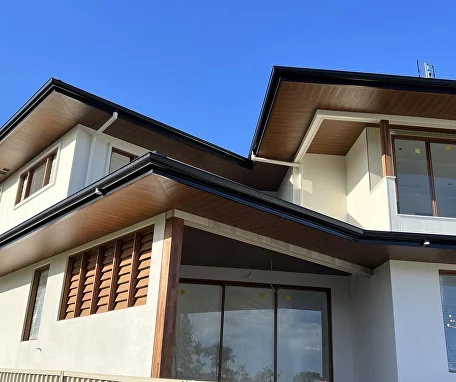
Woodgrain Aluminium Cladding vs Natural Timber Cladding
The look is close; the lifecycle is not. Here is where each material genuinely wins.
Compare ›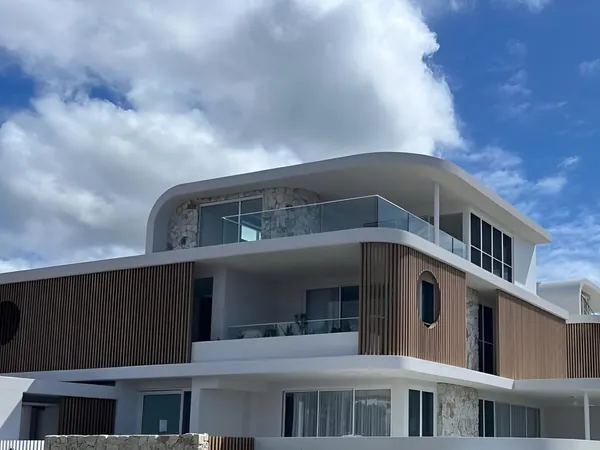
Woodgrain Aluminium vs Composite / ACP Cladding
Both are aluminium-faced. The difference is what sits in the middle - and that matters for fire.
Compare ›
Woodgrain Aluminium vs Vinyl (PVC) Cladding
Vinyl is cheap and easy; aluminium is non-combustible and holds up far better under Australian sun.
Compare ›
Woodgrain Aluminium vs Colorbond Steel Cladding
Two non-combustible metals with different jobs: steel for crisp solid-colour profiles, aluminium for a warm timber look.
Compare ›
Woodgrain Aluminium vs Brick or Rendered Walls
Masonry is the durable base; woodgrain aluminium is the warm face you add over or beside it.
Compare ›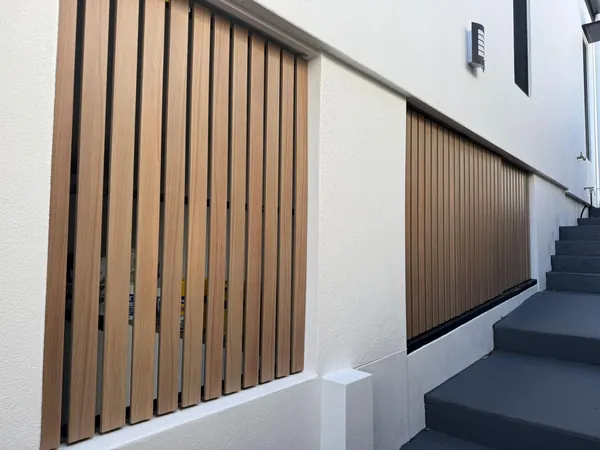
Aluminium Battens vs Timber Battens
Same linear look; very different behaviour once the sun and rain get to them.
Compare ›Planning a woodgrain aluminium project?
Talk to our Australian team for obligation-free advice, samples and pricing in AUD.